Запуск електронної комерції: замовлення, доставка та грошовий потік
Підключіть замовлення, залишки, доставку, COD-платежі та підтримку клієнтів. Практична історія з AI chat, Social Hub і можливістю перейти на ERP.
Anichur Rahaman2 тижні тому12хв

Синхронізуйте онлайн-, POS- та доставку з резервуванням stock, перевіреними поверненнями та узгодженими розрахунками. Практичний посібник із прикладами.
Автор
Anichur Rahaman
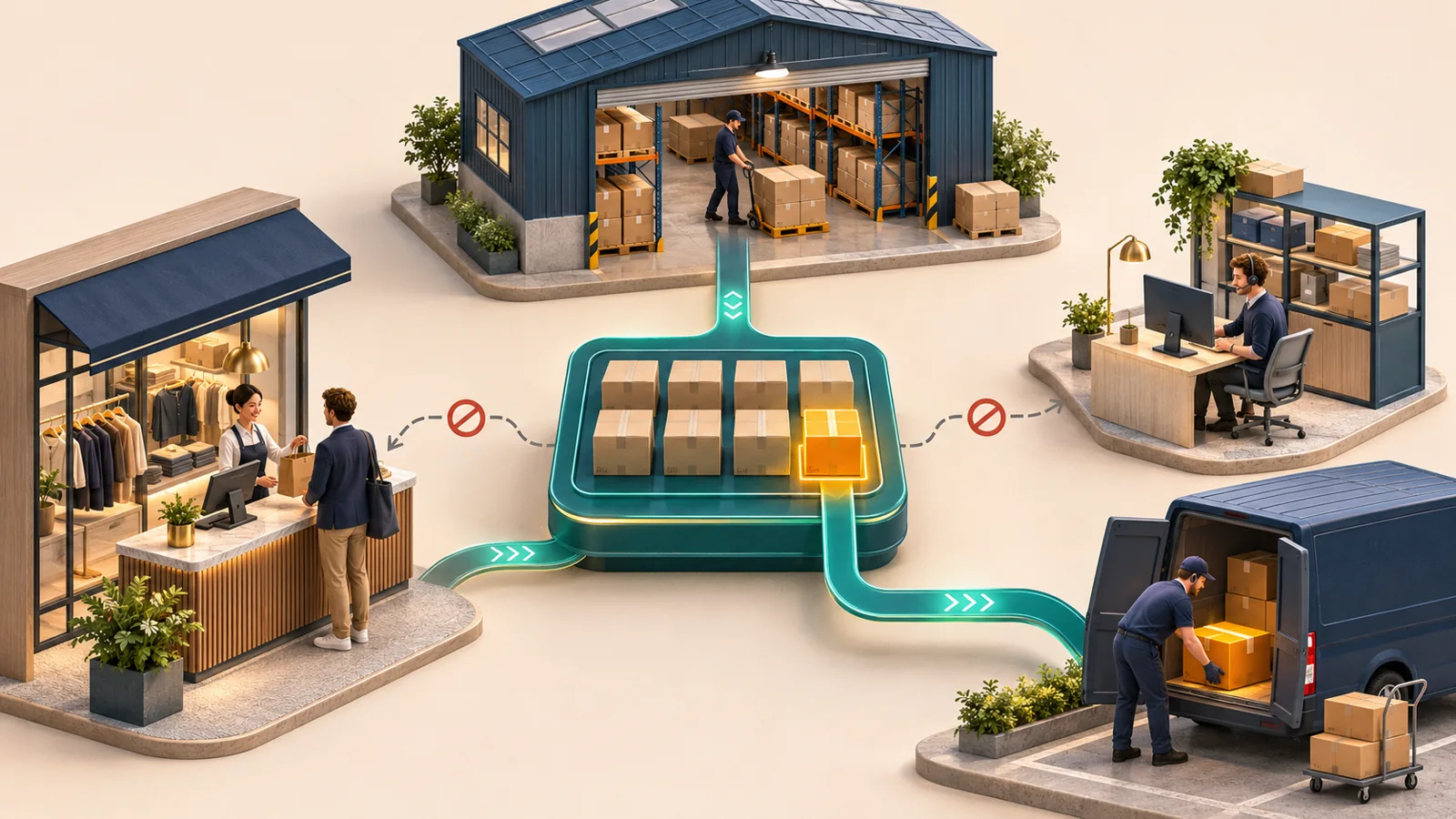
Two shoppers want the last blue jacket: one is at the counter, the other is checking out online. Both screens show one available. Who gets it? This is a teaching example, not a customer case study. It reveals the real omnichannel problem: accepting a promise in one place before the other place knows.
More channels are useful only when the business can fulfil their promises. You do not need to sell everywhere. If you do combine website, shop and chat orders, they need an agreed stock authority, location rules and a visible way to handle exceptions.
This guide follows that jacket from availability to reservation, dispatch, return and cash settlement. It explains the decisions behind one reliable inventory without pretending that a shared database eliminates every mistake.
Competing stock masters are one common cause of overselling. Other causes include delayed receipts, incorrect counts, expired reservations that are never released, offline POS sales and poorly mapped SKUs. Separate systems can work well when ownership, message delivery, reconciliation and failure handling are designed properly; a sync is not automatically a flaw.
The symptoms are familiar:
Separate the sales channel from the physical location. A website is a channel; an outlet is a location. An order may use stock from several locations, subject to fulfilment rules. One authoritative inventory process can publish read-only availability views to many channels. Those views may lag; the final acceptance decision must use a guarded reservation, not a stale screen.
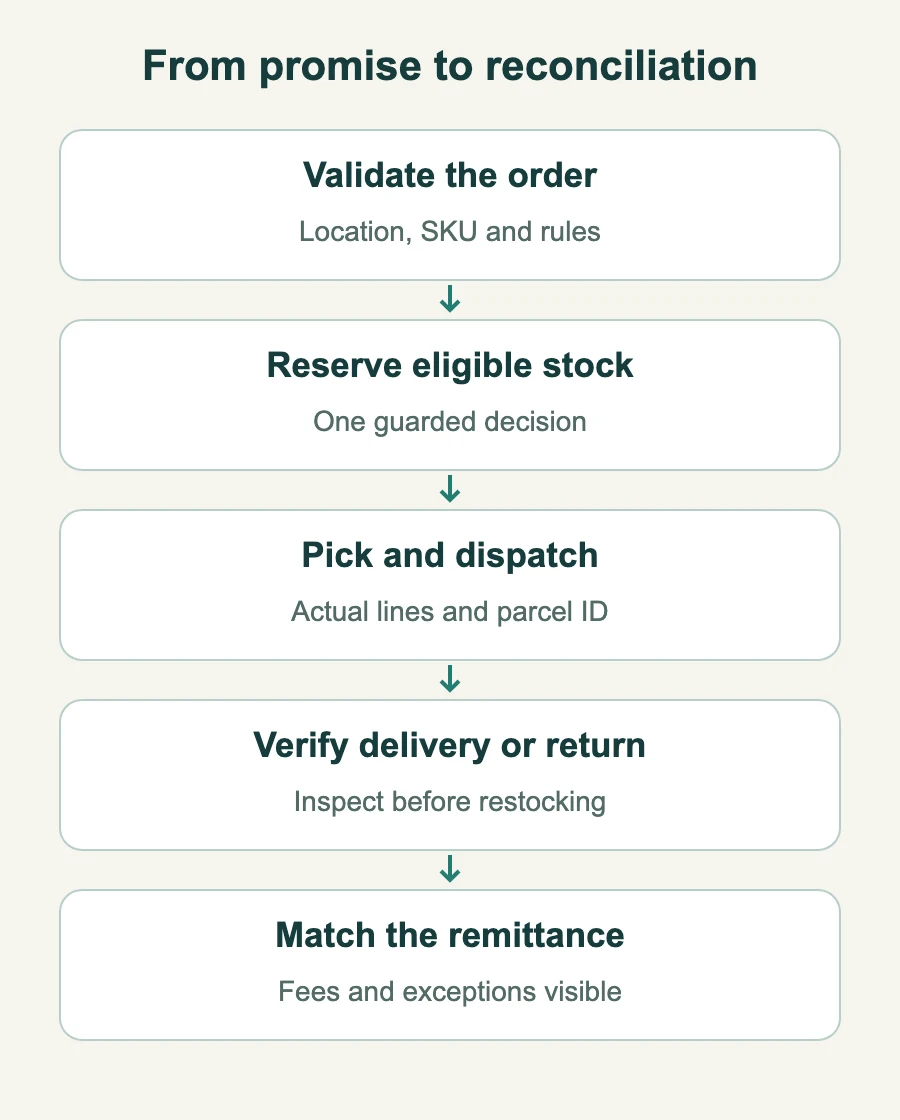
Keep a traceable record of physical movements: receipts, dispatches, transfers, inspected returns and approved adjustments. Track reservations as commitments alongside those movements. A reservation changes what can be promised; it does not move a box out of the building. Stored balance summaries are useful, provided they are updated consistently and can be reconciled to their supporting records.
Define these quantities for each SKU, location and unit of measure. A business with damaged goods or safety stock needs more than three labels:
| Quantity | Meaning |
|---|---|
| On hand | Physically at this location, including any blocked units counted in this measure. |
| Reserved | Committed to accepted orders, not yet dispatched. |
| Unavailable | Damaged, quarantined or otherwise blocked stock, excluding reservations. |
| Safety buffer | A separately withheld allowance, if the policy uses one. |
| Available to promise | On hand − reserved − unavailable − safety buffer, when these buckets are distinct. |
Worked example: on hand 12, already reserved 3, damaged or quarantined 2, safety buffer 1. If those buckets do not overlap, available to promise is 12 − 3 − 2 − 1 = 6. An incoming purchase order is not ready-to-ship stock. Some businesses permit backorders against future receipts; show those as a separate promise with an honest date.
Now return to the last jacket. Acceptance and reservation must be one guarded operation: recheck availability and commit the reservation without another sale taking the same unit in between. A ledger alone does not enforce this. Release a reservation once on cancellation or expiry; consuming it at dispatch must not deduct physical stock twice. When a POS is offline, allocate it a separate stock allowance or restrict last-unit promises until it reconnects.
This short tour shows warehouses, outlets, stock movements and low-stock alerts in one inventory.
A shared platform can simplify a POS workflow, but the business still has to decide the rules. Test the following rather than assuming they happen automatically:
A delivery status is evidence about a parcel, not proof of cash received or a universal revenue-recognition trigger. Keep fulfilment, payment, return and settlement states distinct. Automate the routine steps where supported, and send unresolved exceptions to a named operator.
Illustrative COD example: the courier collects 100 currency units, deducts a documented fee of 8 and transfers 92. Match gross collection, the fee and the bank receipt together. If it transfers 90, the remaining 2 must stay visible for investigation rather than being silently written off. Finance determines the correct accounts and tax treatment. A return after settlement needs linked adjustments; it must not erase the original payment evidence.
The delivery tour below shows couriers, zones, drivers and live parcel status.
| Вимірювання | Визначення |
|---|---|
| Точність обліку позицій | Правильні позиції обліку SKU–місце ÷ перевірені позиції × 100; різницю у вартості звітуйте окремо. |
| Скасування, пов’язане з наявністю товару | Прийняті замовлення, скасовані через відсутність товару ÷ прийняті замовлення в тій сам визначеній групі. |
| Результат доставки | Доставлені, частково доставлені, повернені та ще не закриті посилки з окремим розподілом за групами відправлення. |
| Невідповідна платіжка | Сума та вік нез’ясованих розбіжностей, а не лише кількість імпортованих файлів. |
| Тривалість розрахунків | Тривалість від доставки до розрахунку для розрахованих позицій, а також вік нерозрахованих позицій. |
Використовуйте базові показники й цілі, узгоджені з операційною та фінансовою командами. Визначте групу, часовий діапазон і знаменник до порівняння періодів. Універсального «здорового» відсотка stock або семиденного цільового показника COD не існує. Ці показники поєднують дані inventory, доставки та оплат; лише один stock ledger не дає змоги сформувати їх усі.
Використайте демо StoreConsole щоб відпрацювати власне замовлення через Inventory, POS і Delivery. Підтвердьте модулі, можливості кур’єрів і дозволи, доступні у вашій конфігурації. Попросіть показати конфлікт за останньою одиницею, повернення пошкодженого товару та невідповідну платіжку, а не лише успішний продаж.
Переглянуто 4 листопада 2026 року. Документація Shopify про стани inventory пояснює, чому наявний stock не весь можна продати. Документація PostgreSQL описує механізми блокування бази даних; вони підтримують правильно спроєктовану бізнес-транзакцію, але не замінюють її. Наведені тут розрахунки й workflows є навчальними прикладами, а не гарантією функцій продукту.
Anichur Rahaman — software architect і творець StoreConsole. Він проектує commerce та ERP-системи для компаній, що зростають, з акцентом на event-driven architecture, цілісність даних і self-hosted operations.
Про автора
Anichur Rahaman
Продовжити читання